Medical triage in conflict settings: principles and priorities
- Medical articles
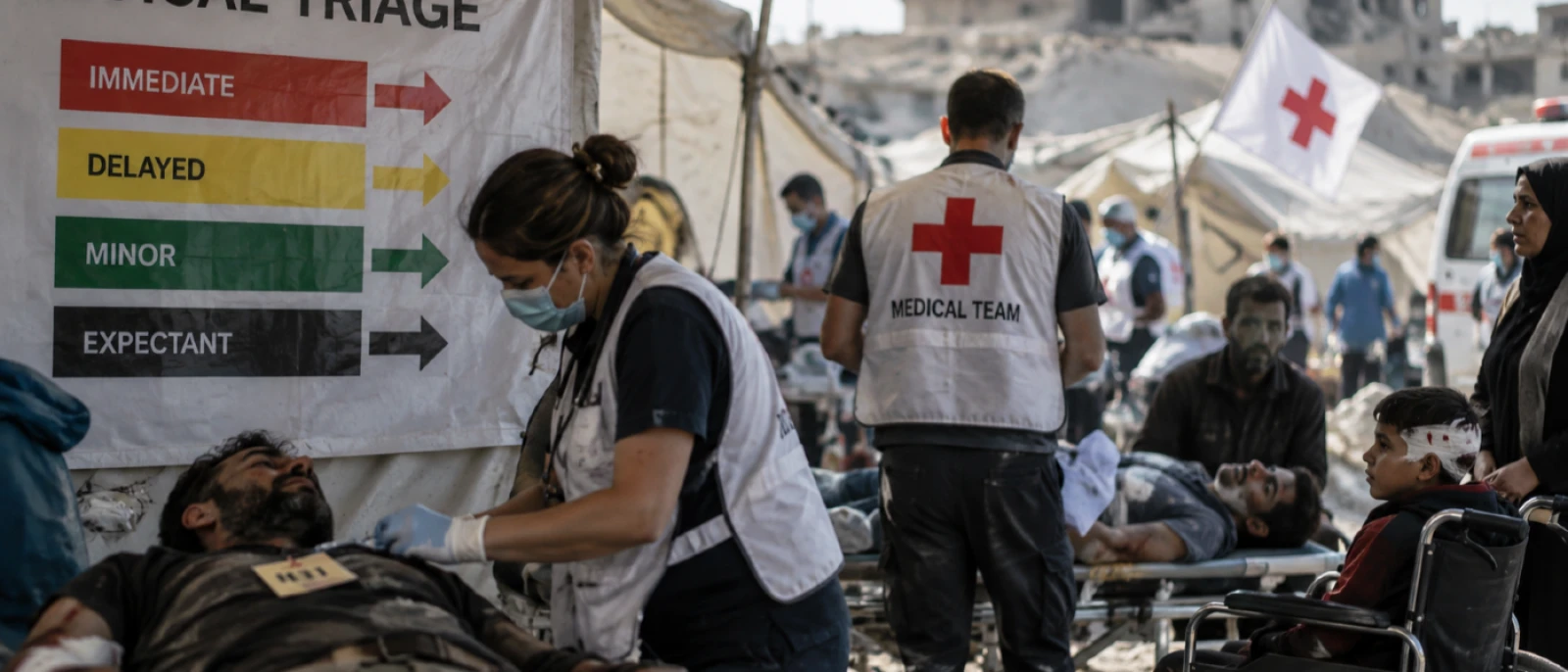
Medical Triage in Conflict Settings: Principles and Priorities
When dozens of injured people arrive at a medical point within minutes, organizing the response becomes an essential part of saving lives. Time is limited, staff are working under pressure, and the available resources may not be enough to provide treatment to everyone at the same moment. This is where medical triage becomes important in determining who needs immediate intervention and who can wait with monitoring.
What is meant by medical triage?
Medical triage is a structured initial assessment used to prioritize care according to the urgency of the health condition. It is carried out by trained professionals using approved protocols, with the aim of directing patients to the appropriate level of care as quickly as circumstances allow.
The World Health Organization explains that triage based on the severity of the condition helps identify patients who need immediate intervention and those who can safely wait. Standard triage procedures differ from those designed for mass casualty incidents that exceed the capacity of a health facility using its usual resources.
Priority goes to medical need
Triage is based on the principle that every person has equal dignity, and that the order of care is determined by medical need. A patient's identity, background, or financial means should not influence the decision.
Likewise, arriving first does not always mean being treated first; a case may arrive later and require more urgent intervention. This is why it is important to explain the process to injured people and their companions in clear language, to reduce anxiety and avoid interpreting the wait as neglect.
Challenges beyond the emergency room
In conflict settings, the influx of injured people may coincide with difficulties reaching hospitals, disrupted communications, or shortages of transport and supplies. Organizing the response therefore requires a clear distribution of roles and continuous communication among reception, treatment, and referral teams.
The value of advance preparedness becomes clear in these circumstances: Where will cases be received? Who coordinates transport? And how is essential information transferred with the injured person? Answering these questions before pressure escalates gives teams a better ability to work in an organized way.
The humanity of care in the hardest moments
Behind every medical decision is a frightened person and a family waiting for news. That is why privacy, respectful communication, and explaining the next steps remain essential elements of care, no matter how severe the circumstances become.
Supporting the medical response in conflict areas includes providing equipment and medicines, and it also includes training staff and improving coordination. When preparedness is combined with expertise and compassion, the chances of an injured person reaching appropriate care become better.
Leave a comment
Your email will not be published. Required fields are marked *